Best Medical Coding Training Institute in Bangalore & Hyderabad

medical coding

CPC certification training in Bangalore
Medical Coding

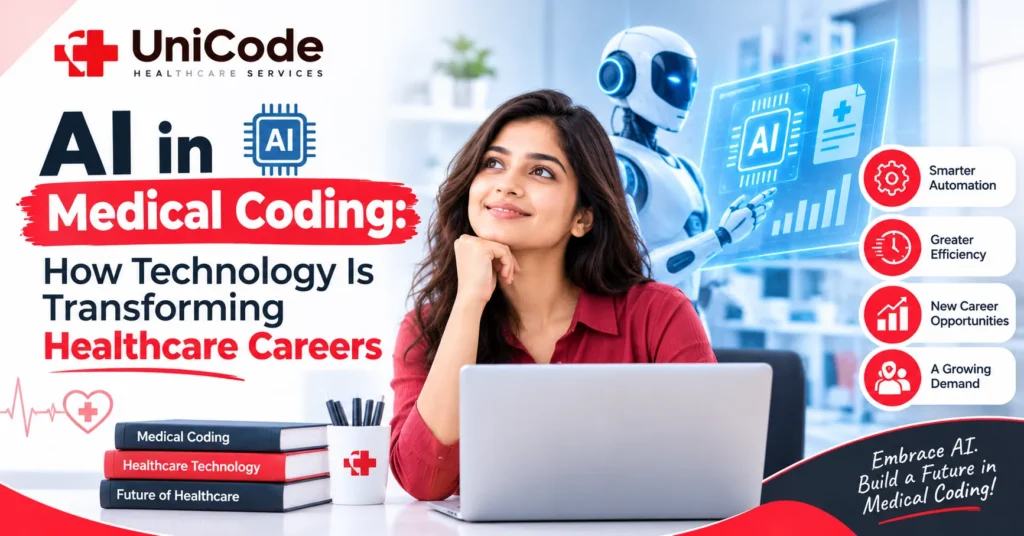
AI in Medical Coding: How Technology Is Transforming Healthcare Careers

AI in Medical Coding: How Technology Is Transforming Healthcare Careers Imagine a medical coder reviewing a patient’s medical record that contains multiple diagnoses, treatment details, laboratory reports, and physician notes. Earlier, the coder had to spend considerable time reading the documentation, identifying relevant information, and searching through coding manuals. Today, artificial intelligence can help complete some of these tasks in a much shorter time. This is how technology is beginning to change the medical coding industry. Artificial Intelligence (AI) is no longer limited to software development, banking, or digital marketing. It is gradually becoming part of healthcare operations, including medical documentation, billing, clinical data management, and medical coding. But what does this mean for someone planning to enter the medical coding profession? Will AI make coding easier? Will companies expect different skills from medical coders? And most importantly, how can students prepare themselves for these changes? If you are exploring a career in medical coding, understanding the relationship between AI and healthcare is becoming increasingly important. Let’s explore how AI is transforming medical coding and what these developments could mean for future healthcare professionals. What Is AI in Medical Coding? Artificial Intelligence in medical coding refers to the use of intelligent computer systems to analyse healthcare documentation, identify clinical information, and assist with assigning appropriate medical codes. Traditionally, medical coders review patient records manually and use standardised coding systems to classify diagnoses and procedures. AI-powered tools can support this process by identifying medical terms, extracting relevant information, and suggesting possible codes based on the documentation. For example, when a physician documents a patient’s condition, an AI-assisted system may identify the diagnosis and recommend a corresponding ICD-10-CM code for the coder to review. However, the suggested code must still be checked against the complete documentation and applicable coding guidelines. AI is designed to support coding activities, not automatically replace the knowledge and responsibility required from qualified professionals. How Is Artificial Intelligence Changing Medical Coding? The growing use of AI is introducing new ways to handle medical records and coding-related tasks. Here are some important areas where this technology can make a difference. 1. Automated Medical Code Suggestions One of the most noticeable applications of AI is automated code suggestion. Medical coding professionals regularly work with ICD-10-CM, CPT, and HCPCS coding systems. Finding the correct code requires understanding the documentation and applying the relevant coding rules. AI-powered software can analyse clinical notes and suggest codes that may be relevant to the documented condition. For example, if a patient’s medical record mentions hypertension, the software may identify the condition and suggest a possible diagnosis code. The medical coder then verifies the documentation, checks the coding guidelines, and confirms whether the suggested code is appropriate. This can reduce some manual searching and make the coding workflow more efficient. 2. Faster Medical Documentation Review Healthcare records can contain lengthy physician notes, discharge summaries, laboratory reports, and treatment information. Reading every document carefully requires time and concentration. AI-based tools can help identify important clinical information within large documents. They may highlight diagnoses, procedures, medications, and other relevant details for further review. This allows medical coders to focus their attention on information that requires careful interpretation. 3. Better Identification of Coding Errors Even experienced medical coders can encounter documentation issues or coding errors, particularly when handling complicated records. AI-assisted systems can help identify potential inconsistencies, missing information, duplicate entries, and unusual coding patterns. For example, a system may flag a code combination that requires additional review or identify a possible mismatch between the documented diagnosis and the selected code. These alerts can help coding teams identify problems earlier. However, automated alerts should not be treated as final decisions. Every finding needs to be evaluated according to the applicable coding rules. 4. Improved Medical Billing Processes Medical coding and medical billing are closely connected. Incorrect coding can contribute to claim rejections, payment delays, and additional administrative work. AI and automation can support different stages of the billing process by identifying missing information, checking certain claim details, and highlighting possible errors before submission. When implemented properly, these technologies may help healthcare organisations reduce repetitive work and improve administrative efficiency. 5. Supporting Healthcare Data Management Hospitals and healthcare organisations generate large volumes of patient information every day. AI can help organise and analyse this information, making it easier to identify patterns and retrieve relevant clinical details. Accurately coded healthcare information also supports research, reporting, disease tracking, and healthcare planning. Medical coding therefore plays an important role beyond billing and insurance claims. Which Medical Coding Systems Are Used Alongside AI? Even as technology advances, understanding standardised coding systems remains essential. AI tools work with healthcare information, but medical coding professionals need to understand the systems used to classify diagnoses and procedures. Some of the major coding systems include: ICD-10-CM: Used to classify diseases, diagnoses, symptoms, and other health conditions in the United States. CPT: Used to describe medical procedures and professional healthcare services. HCPCS Level II: Used to identify certain medical supplies, equipment, products, and services. ICD-10-PCS: Used to report inpatient hospital procedures in the United States. A medical coder should understand how these systems work rather than depending entirely on automated suggestions. Technology may help identify a possible code, but the professional must understand why that code is appropriate. Will AI Replace Medical Coding Professionals? This is one of the biggest questions among students considering medical coding as a career. The introduction of AI may automate certain repetitive activities, but medical coding involves much more than identifying medical terms and selecting corresponding codes. Consider a patient record that mentions diabetes, hypertension, and other medical conditions. An AI system may recognise these terms and suggest possible codes. However, the coder must determine whether the conditions are relevant to the encounter, whether the documentation supports reporting them, and which coding guidelines apply. This requires knowledge of medical terminology, anatomy, clinical documentation, and coding conventions. Human review is also important when documentation is incomplete, unclear, or complicated. Instead of viewing AI as

CPC certification course in Bangalore
Medical Coding

What Is Medical Coding? Meaning, Examples, and Career Opportunities in Bangalore

What Is Medical Coding? Meaning, Examples, and Career Opportunities in Bangalore Have you ever wondered how a doctor’s diagnosis becomes a code on a hospital bill or an insurance claim? Behind that simple-looking code is an important process that helps hospitals, healthcare providers, and insurance companies communicate accurately. This process is known as medical coding, and it has become an interesting career option for graduates who want to work in the healthcare industry without treating patients directly. Bangalore, with its hospitals, healthcare service providers, medical billing companies, and healthcare technology businesses, offers opportunities for people interested in this field. Whether you are a life science graduate, a pharmacy student, a nursing graduate, or someone planning a career change, understanding medical coding can help you decide whether this profession suits your goals. At Unicode Healthcare Services, aspiring medical coders can explore professional training to understand medical terminology, anatomy, coding guidelines, and certification preparation. Before choosing a course, however, let us understand what medical coding actually involves and how you can build a career in this field. What Is Medical Coding? Medical coding is the process of converting information from medical records into standardised alphanumeric codes. These records may include a patient’s diagnosis, symptoms, medical procedures, laboratory findings, and treatment details. Doctors and other healthcare professionals document patient care in medical records. Medical coders review that documentation and assign the appropriate codes according to established coding guidelines. These codes help healthcare organisations maintain consistent records, process insurance claims, support billing, and analyse healthcare information. For example, a doctor may document that a patient has been diagnosed with type 2 diabetes. A medical coder reviews the documentation, checks the applicable coding guidelines, and assigns the appropriate ICD-10-CM code. The coder does not diagnose the patient or independently decide which treatment is required. The role is to translate documented medical information into the correct codes while following established rules. In simple words, medical coding connects clinical documentation with the administrative and financial processes of healthcare. Why Is Medical Coding Important in Healthcare? Medical coding is more than entering numbers into a computer. Accurate coding supports several essential healthcare activities. 1. Accurate Medical Billing Hospitals and healthcare providers use coded information as part of their billing processes. Correct codes help communicate the services provided and the conditions treated. 2. Insurance Claim Processing Insurance companies use medical codes when reviewing claims. Coding errors, missing information, or unsupported codes may lead to claim rejections, delays, or requests for additional documentation. 3. Maintaining Patient Records Standardised codes help healthcare organisations organise and retrieve information about diagnoses, procedures, and patient care. 4. Healthcare Research and Reporting Coded data can be used to study disease patterns, understand healthcare utilisation, and support public health reporting. 5. Compliance With Coding Guidelines Medical coders must follow applicable coding standards and documentation requirements. Correct coding helps healthcare organisations maintain accurate records and reduce compliance risks. These responsibilities make attention to detail, medical knowledge, and a willingness to keep learning important qualities for anyone entering this profession. Medical Coding Examples: How Does It Work? The easiest way to understand medical coding is to look at a few examples. Example 1: Type 2 Diabetes Imagine that a patient visits a hospital for diabetes management. After examining the patient, the doctor documents a diagnosis of type 2 diabetes mellitus. The medical coder reviews the medical record and identifies the appropriate diagnosis code based on the documented condition and applicable guidelines. For example, ICD-10-CM code E11.9 represents type 2 diabetes mellitus without complications, when the documentation supports that classification. If the patient has documented complications, a different, more specific code may be required. Example 2: A Common Cold A patient visits a healthcare provider with symptoms of a common cold. The doctor documents the diagnosis as an acute nasopharyngitis. The medical coder reviews the documentation and may assign ICD-10-CM code J00, which represents acute nasopharyngitis [common cold]. The code must match the diagnosis recorded in the medical documentation. Example 3: A Surgical Procedure Suppose a patient undergoes a surgical procedure in a hospital. The coder reviews the operative report, identifies the procedure performed, and applies the appropriate coding system and guidelines. Depending on the healthcare setting and purpose, the coder may work with procedure coding systems such as CPT or ICD-10-PCS. These examples illustrate why medical coders need to understand medical terminology, anatomy, diseases, procedures, and coding rules instead of simply memorising codes. Note: These are educational examples. Actual code selection depends on the complete medical documentation, applicable guidelines, code-set version, and healthcare setting. What Are the Main Medical Coding Systems? Medical coding professionals work with different coding systems depending on the type of information being coded and the healthcare setting. ICD-10-CM ICD-10-CM is used in the United States to classify diagnoses and health conditions. Medical coders use it to report diseases, symptoms, and other documented conditions. CPT Current Procedural Terminology (CPT) codes describe many medical procedures and professional services. These codes are commonly used in US outpatient and professional healthcare billing. HCPCS Level II HCPCS Level II codes are used to identify certain products, supplies, equipment, and services that may not be described by CPT codes. ICD-10-PCS ICD-10-PCS is used for reporting inpatient hospital procedures in the United States. A student who understands how these systems differ can develop a stronger foundation for working with medical records and preparing for relevant certification examinations. Who Can Build a Career in Medical Coding? One reason medical coding attracts graduates from different educational backgrounds is that it combines healthcare knowledge with structured, detail-oriented work. Depending on the employer’s requirements, suitable candidates may include: B.Pharm and M.Pharm graduates B.Sc. and M.Sc. life science graduates Nursing graduates Graduates in biotechnology, microbiology, and related subjects Other candidates who meet the relevant employer and training eligibility requirements A healthcare-related educational background can be helpful because students may already understand basic medical terminology, human anatomy, physiology, or disease processes. However, every employer has its own eligibility criteria. Completing a course does not automatically guarantee

ICD-10 IN THE US
Blog

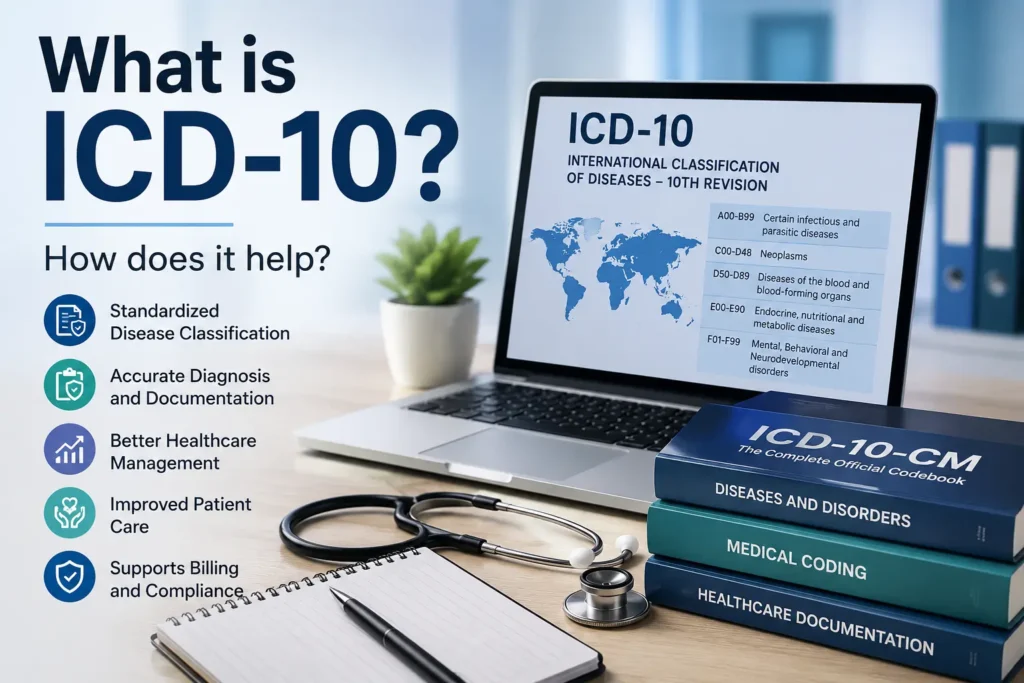
What is ICD-10? How Does It Help?

What is ICD-10? How Does It Help? What is ICD-10? How Does It Help? In today’s healthcare industry, accurate documentation and standardized communication are essential. Doctors, hospitals, insurance companies, and healthcare professionals across the world rely on a common system to record diseases and medical conditions. This system is known as the International Classification of Diseases (ICD). Among its versions, ICD-10 has become one of the most widely used coding systems, playing a vital role in diagnosis reporting, medical billing, public health monitoring, and healthcare analytics. If you are planning a career in medical coding or simply want to understand how healthcare documentation works, learning about ICD-10 is the perfect place to start. What is the International Classification of Diseases? The International Classification of Diseases (ICD) is a globally recognized coding system developed by the World Health Organization (WHO). It provides a standardized method for classifying diseases, symptoms, injuries, and health conditions. Healthcare providers use these codes to: Document patient diagnoses Maintain electronic health records Process insurance claims Track diseases and health trends Support medical research Improve healthcare management Since the same coding language is used worldwide, healthcare professionals can communicate medical information consistently and accurately. History of ICD The origins of the International Classification of Diseases date back more than a century. In the late 1800s, an international effort was made to create a uniform system for recording causes of death. Over the years, the classification system evolved to include diseases, injuries, and health conditions. The World Health Organization assumed responsibility for maintaining and updating the ICD after its establishment in 1948. Several versions have been introduced: ICD-6 (1949) ICD-7 (1955) ICD-8 (1965) ICD-9 (1975) ICD-10 (1990) ICD-11 (latest version) Each revision expanded the number of codes and improved the ability to capture detailed medical information. What is ICD-10? ICD-10 stands for the 10th Revision of the International Classification of Diseases. It was developed by the World Health Organization to provide more detailed and specific disease classification compared to ICD-9. ICD-10 contains thousands of diagnosis codes used to describe: Diseases Injuries Symptoms Medical conditions External causes of illness Factors influencing health status These codes are alphanumeric and usually consist of three to seven characters, allowing healthcare providers to document patient conditions with greater precision. For example: E11.9 – Type 2 Diabetes Mellitus without complications I10 – Essential Hypertension J45.909 – Unspecified Asthma, uncomplicated This level of detail helps ensure accurate diagnosis reporting and reimbursement. ICD-10 in the United States The United States adopted ICD-10-CM (Clinical Modification) for diagnosis coding on October 1, 2015, replacing ICD-9-CM. The U.S. version includes additional codes and clinical details specifically designed to meet healthcare documentation and reimbursement requirements. ICD-10-CM is used by: Hospitals Physician offices Clinics Insurance companies Government healthcare programs Medical coders and billers The implementation of ICD-10 significantly improved coding accuracy and allowed healthcare organizations to capture more comprehensive patient information. Why Was ICD-10 Introduced? ICD-9 had limitations due to its smaller number of codes and inability to describe modern healthcare conditions adequately. ICD-10 was introduced to: Increase coding specificity Improve patient documentation Support better reimbursement processes Enhance disease tracking Facilitate healthcare research Meet advancements in medicine and technology The expanded coding system allows healthcare professionals to record diagnoses more accurately and efficiently. How Does ICD-10 Help? 1. Improves Diagnostic Accuracy ICD-10 offers detailed codes that enable physicians and medical coders to represent diseases and conditions more precisely. Accurate diagnosis coding contributes to better treatment and patient care. 2. Supports Medical Billing and Insurance Claims Insurance companies require diagnosis codes to process claims. ICD-10 helps healthcare providers submit claims accurately, reducing delays and denials. 3. Enhances Patient Record Management Standardized coding ensures that patient information remains organized and easy to retrieve, supporting continuity of care. 4. Assists Public Health Monitoring Government agencies and healthcare organizations use ICD-10 data to track disease outbreaks, monitor population health, and develop preventive strategies. 5. Facilitates Medical Research Researchers analyze ICD-10-coded data to study disease trends, treatment outcomes, and healthcare patterns, contributing to medical advancements. Structure of ICD-10 Codes ICD-10 codes follow an alphanumeric format: First character: Alphabet Second and third characters: Numeric Additional characters: Provide greater specificity For example: M54.5 M = Diseases of the musculoskeletal system 54 = Dorsalgia category .5 = Low back pain This structure allows coders to capture detailed information about a patient’s condition. Who Uses ICD-10? Many healthcare professionals and organizations rely on ICD-10, including: Physicians Hospitals Medical coders Insurance companies Healthcare researchers Public health agencies Government organizations Without standardized diagnosis codes, maintaining consistency in healthcare documentation would be difficult. Importance of ICD-10 in Medical Coding For medical coders, ICD-10 is one of the most important coding systems to master. Understanding ICD-10 helps coders: Assign accurate diagnosis codes Improve claim approval rates Reduce billing errors Maintain compliance standards Enhance coding productivity This is why ICD-10 training is a fundamental part of medical coding courses and certification programs. Future of ICD Coding Healthcare continues to evolve, and coding systems evolve with it. The latest version, ICD-11, has already been introduced globally, offering even more advanced digital capabilities. However, ICD-10 remains widely used and continues to be the foundation of diagnosis coding in many countries, including the United States. Medical coding professionals who build a strong understanding of ICD-10 establish a solid foundation for adapting to future coding systems. Frequently Asked Questions (FAQs) What does ICD-10 stand for? ICD-10 stands for the 10th Revision of the International Classification of Diseases, a coding system used to classify diseases and health conditions. Who developed ICD-10? ICD-10 was developed by the World Health Organization (WHO) to standardize disease classification worldwide. Why is ICD-10 important? ICD-10 improves diagnostic accuracy, supports insurance claims, enhances patient record management, and assists healthcare research and disease tracking. When did the United States adopt ICD-10? The United States officially adopted ICD-10-CM on October 1, 2015. What is the difference between ICD-9 and ICD-10? ICD-10 contains significantly more codes and provides greater specificity compared to ICD-9, allowing more detailed documentation. Is ICD-10

🎯 Admissions Open for 2026 Batch   |   💼 100% Placement Assistance   |   📞 Call Now:+91-7022469777—  For  Medical Coding & CPC Certifications  | Medical Coding & CPC Certification New Batch Start  From 16th NOV | Training Available In:- Malayalam | English |Tamil | Hindi| Telugu |Kannada

Contact Us


Scroll to Top