Best Medical Coding Training Institute in Bangalore & Hyderabad

September 2026

medical coding jobs in Vijayawada
Education

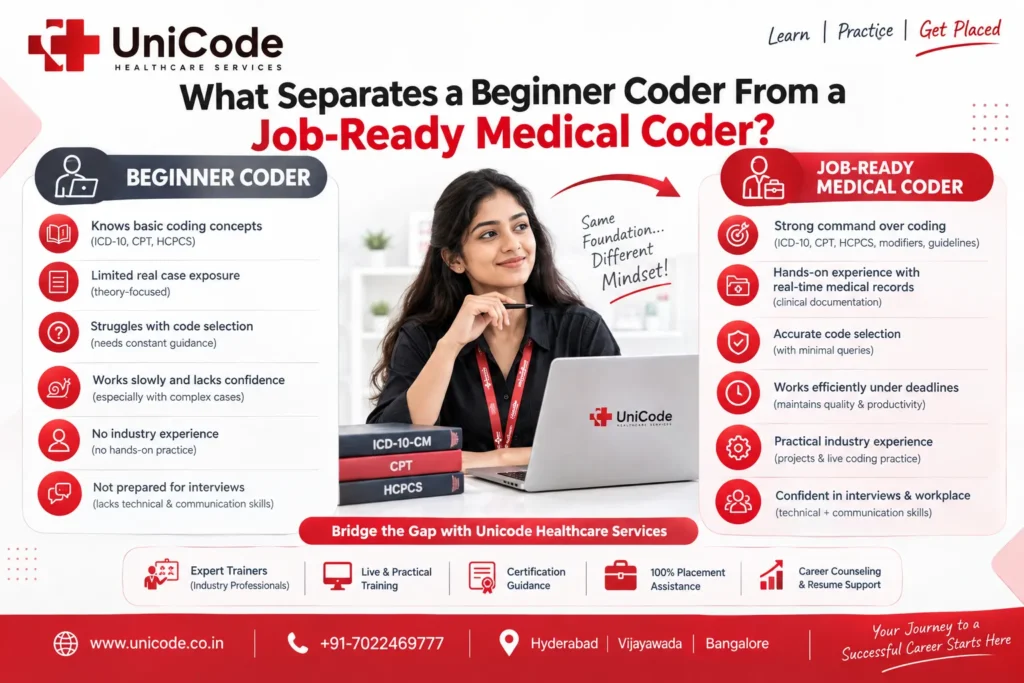
What Separates a Beginner Coder From a Job-Ready Medical Coder?

What Separates a Beginner Coder From a Job-Ready Medical Coder? You can complete a medical coding course, learn ICD-10-CM, memorize CPT codes, and even earn a certification—but does that automatically make you job-ready? Not always. There is a big difference between knowing medical coding concepts and being able to apply those concepts confidently to real medical records. A beginner may know what a diagnosis code is, while a job-ready coder understands how to read documentation, identify the relevant information, apply coding guidelines, and choose the appropriate code with accuracy. That difference is what employers notice. If you are planning to enter the healthcare industry, understanding what makes a coder truly job-ready can help you prepare for your first interview and your first day at work. What Does a Beginner Medical Coder Usually Know? A beginner generally starts by learning the fundamentals of medical coding. This includes subjects such as: Medical terminology Human anatomy and physiology ICD-10-CM coding CPT coding HCPCS Level II Basic coding guidelines Medical documentation Diagnosis and procedure concepts Introduction to medical billing These fundamentals are important because they create the foundation for a medical coding career. However, knowing definitions from a textbook is only the first step. For example, a beginner may know that ICD-10-CM is used for diagnosis coding. A job-ready coder needs to understand how the diagnosis is documented, whether the documentation supports a particular code, whether additional information is required, and which coding guidelines apply. That practical difference matters. 1. A Job-Ready Coder Can Read Medical Records One of the most important skills for a medical coder is the ability to understand clinical documentation. Medical records can contain a lot of information—patient history, symptoms, diagnoses, examination findings, procedures, medications, test results, and treatment plans. A job-ready coder knows how to separate relevant information from unnecessary details. They can identify: Why the patient was seen What condition was diagnosed What services were performed Relevant clinical details Supporting documentation Information needed for accurate code selection This skill develops through practice. Reading actual or realistic coding cases is very different from simply studying coding definitions. 2. They Don’t Guess When Documentation Is Unclear This is one of the biggest differences between a beginner and an experienced or job-ready coder. A beginner may feel pressured to select a code quickly, even when the documentation is incomplete. A professional coder understands that accuracy comes before guessing. If the medical record does not provide enough information to support a specific code, the coder should follow the applicable guidelines and organizational procedures rather than simply assuming what the provider meant. This mindset helps prevent coding errors and supports better documentation and compliance. 3. They Understand Coding Guidelines Instead of Just Memorizing Codes Medical coding isn’t a memory competition. There are thousands of codes, and trying to memorize everything is neither practical nor necessary. A job-ready coder understands how to find, verify, and apply coding information. They become comfortable working with: ICD-10-CM guidelines CPT guidelines HCPCS guidelines Codebook instructions Includes and Excludes notes Laterality Combination codes Code-first and use-additional-code instructions Applicable modifiers Documentation requirements The ability to research a code properly is often more valuable than simply remembering a long list of codes. 4. They Develop Strong Medical Terminology Skills Imagine coming across a medical record containing unfamiliar terminology. A beginner might stop at every unfamiliar word. A job-ready coder has enough medical terminology knowledge to understand the context and recognize important terms related to diseases, procedures, body systems, and treatments. Strong terminology skills make the entire coding process faster and more accurate. That’s why medical terminology should not be treated as a subject that you study once and forget. It becomes part of your everyday coding work. 5. They Understand Anatomy and Physiology Medical coding becomes much easier when you understand how the human body works. For example, if you understand the relationship between organs, body systems, diseases, and procedures, clinical documentation becomes easier to interpret. A job-ready coder doesn’t necessarily need to think like a doctor, but they need a strong enough foundation in anatomy and physiology to understand what they are coding. This is particularly important when working with complex specialties and procedures. 6. They Can Apply Knowledge to Real Cases This is where training becomes extremely important. You can spend hours reading about ICD-10-CM and CPT, but your confidence changes when you start working through actual coding scenarios. A job-ready coder should regularly practice cases involving: Outpatient visits Common diagnoses Surgical procedures E/M services Injuries Chronic conditions Laboratory and diagnostic services Specialty-specific documentation Case-based learning teaches you how to think through a record rather than simply search for a keyword. 7. They Pay Attention to Small Details Medical coding requires concentration. A small detail in a medical record can change the code selection. Things such as: Laterality Acute vs. chronic condition Initial vs. subsequent encounter Specific anatomical location Type of procedure Complications Documentation requirements can make a significant difference. A job-ready coder develops the habit of checking the details instead of rushing through the record. Accuracy is not just about knowing more codes. It’s also about developing the discipline to review documentation carefully. 8. They Know How to Handle Modifiers and Coding Situations As coders move beyond the basics, they encounter situations where simply selecting a diagnosis or procedure code isn’t enough. They may need to understand the appropriate use of modifiers and how different services are reported. For example, modifiers such as 25 and 59 can be important in appropriate circumstances, but they should never be applied simply because a coder wants to increase reimbursement. A job-ready coder understands that modifiers must be supported by documentation and applicable coding rules. 9. They Know That Certification Is Only One Part of Career Preparation Certifications such as CPC can be valuable for people entering the medical coding field. However, passing an examination and performing well in a workplace are two different experiences. Certification can demonstrate knowledge of coding concepts, while practical training helps develop the ability to apply
medical-coding-career-2026-bangalore
Blog

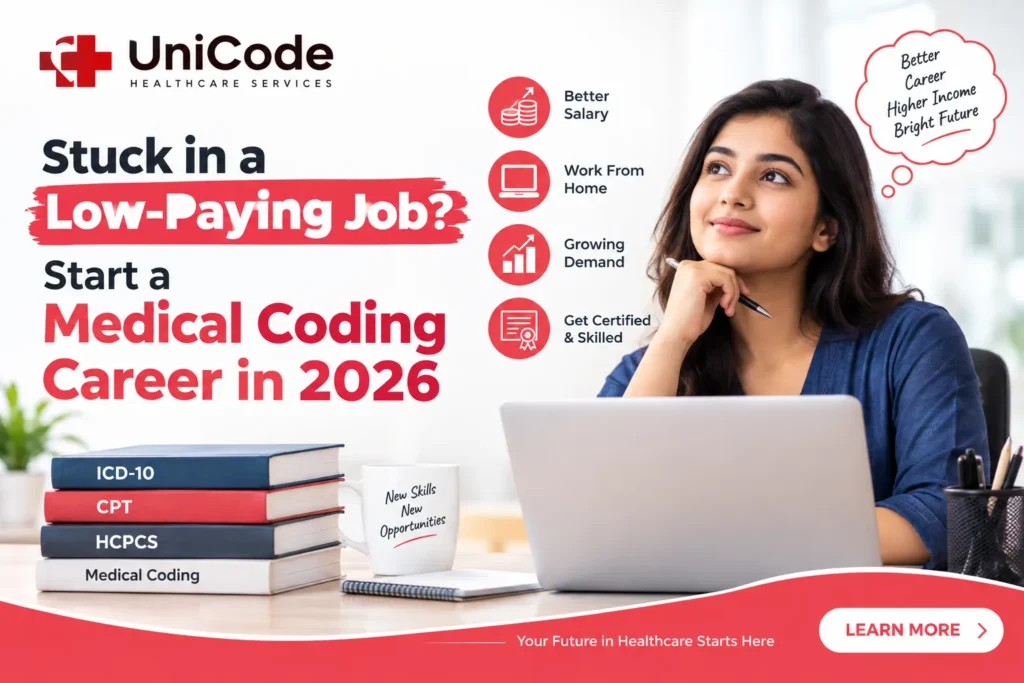
Stuck in a Low-Paying Job? Start a Medical Coding Career in 2026

Stuck in a Low-Paying Job? Start a Medical Coding Career in 2026 Are you working hard every day but still feel like your salary and career growth have reached a dead end? You are not alone. Many graduates and working professionals want to move into a better career but hesitate because changing industries can feel risky. If you already have a background in life sciences, healthcare, pharmacy, biotechnology, or a related field, there may be a career path worth exploring without spending years going back to college. Medical coding is one such option. As healthcare organizations continue to depend on accurate clinical documentation, coding, billing, claims, and revenue-cycle processes, trained professionals are needed to handle these responsibilities. For the right candidate, medical coding can become a practical entry point into the healthcare industry. But before you leave your current job or join a course, it is important to understand what the career actually involves and how you can prepare for it. What Is Medical Coding? Medical coding is the process of converting information from medical documentation into standardized codes. When a patient visits a hospital, clinic, or healthcare provider, the medical record can contain diagnoses, symptoms, procedures, treatments, and other clinical information. A medical coder reviews this documentation and assigns appropriate codes according to established coding systems and guidelines. Some of the major coding systems include: ICD-10-CM for diagnosis coding CPT for many medical procedures and professional services HCPCS Level II for various healthcare services, supplies, and products Medical coding plays an important role in healthcare administration, claims processing, reporting, and reimbursement. Why Are Professionals Moving Toward Medical Coding? A low salary isn’t always the only reason someone considers a career change. Sometimes the real problem is a lack of growth, learning, stability, or a clear career path. Medical coding attracts people from different educational and professional backgrounds because it combines healthcare knowledge with analytical and documentation-based work. For graduates who don’t want a clinical career, it can provide another way to work within the healthcare industry. However, medical coding isn’t a shortcut to instant success. Like any professional career, it requires training, practice, accuracy, and continuous learning. Who Can Consider a Career in Medical Coding? Medical coding can be particularly interesting for graduates with backgrounds in: Life Sciences Biotechnology Microbiology Biochemistry Pharmacy Nursing Allied healthcare Other healthcare-related disciplines Graduates from other backgrounds may also explore the field, but they may need to spend additional time building their medical knowledge. If you already understand basic biology, anatomy, physiology, or medical terminology, you may have a useful foundation to build upon. What Does a Medical Coder Actually Do? A medical coder’s day isn’t simply about looking up codes. Depending on the role, responsibilities may include: Reviewing medical records Understanding provider documentation Identifying diagnoses and procedures Applying coding guidelines Assigning appropriate codes Checking documentation for accuracy Reviewing coding-related issues Maintaining coding quality Working with quality or auditing teams The ability to understand the documentation behind a code is one of the most important skills for a successful coder. Skills You Need to Build in 2026 If you’re serious about moving into medical coding, don’t focus only on memorizing codes. Build a strong foundation. 1. Medical Terminology You should be comfortable with common medical terms, abbreviations, diseases, procedures, and clinical language. 2. Anatomy and Physiology Understanding the human body helps you interpret medical documentation more effectively. 3. ICD-10-CM You need to understand how diagnosis codes are structured and how coding guidelines influence code selection. 4. CPT Knowledge of CPT is important for understanding how many procedures and professional services are reported. 5. HCPCS HCPCS Level II covers various services, supplies, and healthcare products. 6. Coding Guidelines Knowing the rules behind coding decisions is more valuable than simply memorizing codes. 7. Attention to Detail A small documentation detail can change a coding decision. Accuracy is therefore extremely important. 8. Analytical Thinking Medical records aren’t always straightforward. You need to understand the documentation and determine how the applicable guidelines should be applied. 9. Communication Skills Medical coders work as part of larger healthcare teams, so clear communication is useful for professional growth. Is Certification Important for Medical Coders? Certification can demonstrate your knowledge and commitment to the profession. One certification that many aspiring professional coders consider is the CPC (Certified Professional Coder) credential. Depending on your career goals, there are also other professional certifications related to areas such as: Inpatient coding Risk adjustment coding Specialty coding Professional coding Healthcare coding and compliance The right certification depends on the type of coding career you want to pursue. If you’re searching for CPC certification in Bangalore, don’t look only at the certification exam itself. Pay attention to the quality of preparation, practical coding exercises, trainer support, and your understanding of the underlying concepts. Why Practical Training Matters Imagine learning to drive by reading a driving manual but never sitting behind the wheel. You may know the rules, but applying them in real situations is different. Medical coding works in a similar way. You can memorize ICD-10-CM codes, CPT concepts, and medical terminology, but real medical records can contain complex documentation. That is why practical training should include: Sample medical records Case-based exercises Coding practice ICD-10-CM exercises CPT practice HCPCS concepts Coding guideline application Mock assessments Interview preparation When comparing best medical coding courses in Bangalore, look at the practical component rather than choosing a program simply because it has a short duration. How to Choose the Best Medical Coding Institute in Bangalore Bangalore has a large healthcare and technology ecosystem, making it an attractive location for people exploring healthcare-related careers. But choosing the right institute requires some research. When comparing the best medical coding institutes in Bangalore, ask: What topics are covered? Is the curriculum updated? Are medical terminology and anatomy included? Does the training cover ICD-10-CM, CPT, and HCPCS? Are practical case studies provided? Are trainers experienced? Is certification preparation included? Is interview preparation provided? Is career guidance available? Can students ask questions and receive

🎯 Admissions Open for 2026 Batch   |   💼 100% Placement Assistance   |   📞 Call Now:+91-7022469777—  For  Medical Coding & CPC Certifications  | Medical Coding & CPC Certification New Batch Start  From 16th NOV

Contact Us


Scroll to Top